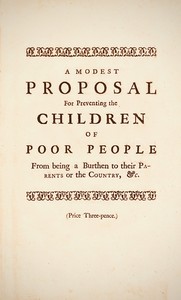
File Reader: A Modest Proposal: For preventing the children of poor people in Ireland, from being a burden on their parents or country, and for making them beneficial to the publick
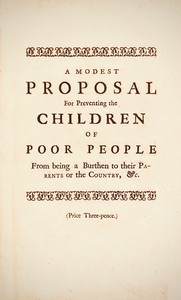
Delve into the sharp wit and profound satire of Jonathan Swift's timeless classic, A Modest Proposal. Written in 1729, this groundbreaking work offers a scathing critique of societal indifference towards the plight of the impoverished in Ireland. Swift's ingenious argument presents an outrageous solution to poverty, forcing readers to confront the harsh realities of their time while engaging with a narrative that still resonates today.
The Story
In A Modest Proposal, Swift adopts the voice of a concerned citizen who suggests an alarming solution to alleviate the suffering of the impoverished children of Ireland. By proposing that these children be sold as food to the wealthy, he highlights the apathy of the ruling class towards the impoverished. Through this shocking proposition, Swift satirizes the heartless attitudes of society and the government, urging readers to reconsider their views on poverty and compassion. The essay serves as a powerful commentary on the exploitation of the vulnerable and the moral obligations of the privileged.
Why You Should Read It
- Timeless Relevance: Despite being written over 290 years ago, the themes of social injustice and economic disparity remain pertinent today.
- Sharp Satire: Swift's masterful use of irony and humor challenges readers to reflect critically on their own beliefs and societal norms.
- Provocative Insights: The essay encourages deep thought about the ethics of wealth distribution and the responsibilities of those in power.
- Cultural Significance: As a cornerstone of English literature, this work has influenced countless writers and thinkers, making it essential reading for anyone interested in literary history.
- Engaging Narrative: Swift's compelling writing style captivates readers, making complex social issues accessible and thought-provoking.